Selected villages, revisited every two to three months.
Frequency adapts to clinical need, seasonality, road access, partner schedules and referral capacity.
Melapo Outreach
A clinic that travels, and then comes back.
At each visit
Clinical assessment, agreed screening, selected point-of-care tests, minor treatment within scope, health education, referral planning and navigation enrolment.
Between visits
Results reconciliation within 72 hours, urgent escalation, appointment tracking, telehealth or phone follow-up, social-work support.
Vehicles and field capacity
01
Purpose-configured vehicles
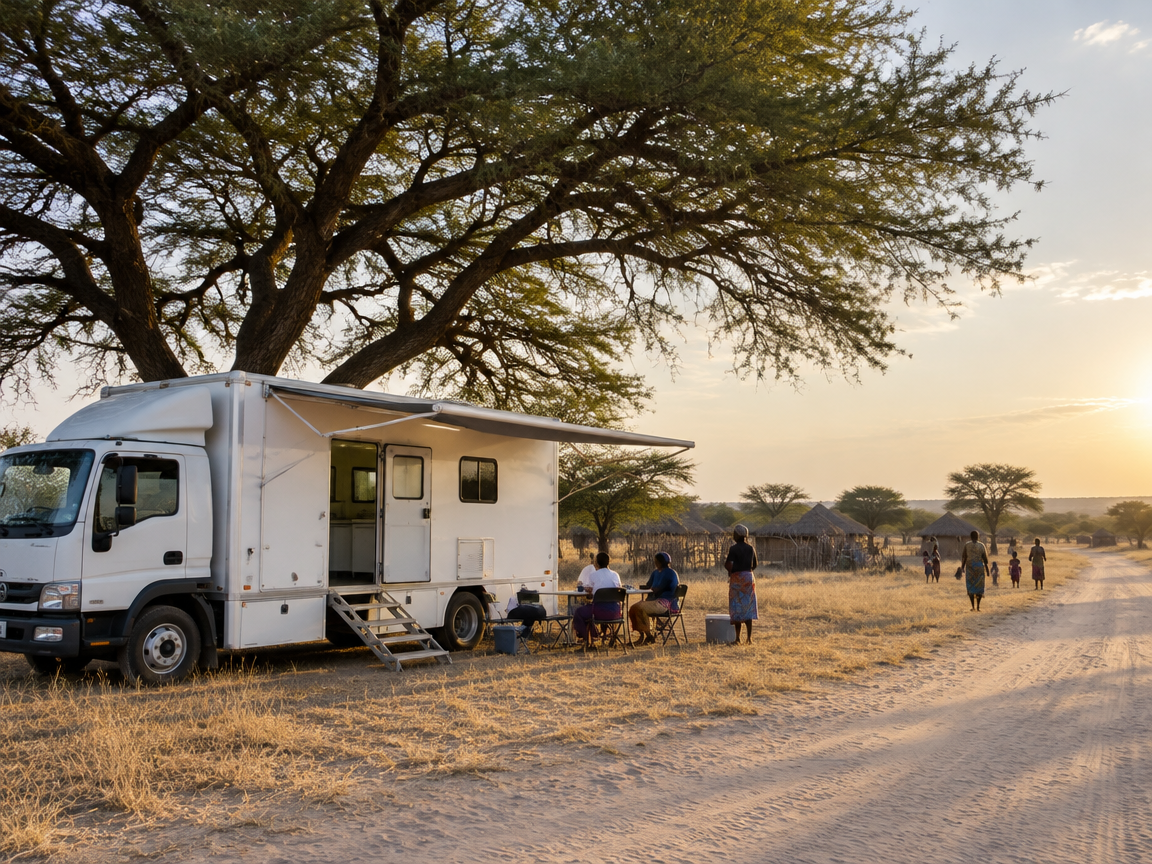
4x4 mobile units carrying a private examination space, point-of-care diagnostics, a cold chain for samples and vaccines, dispensing stock and secure digital records that connect to the same patient record as the clinic.
02
Readiness before routes
Visits are planned around vehicle maintenance, fuel, clinical stock and staff rosters. A visit is rescheduled rather than run short of clinical capacity.
03
Field safety
Every route names its nearest receiving facility, escalation contact and emergency plan before departure, with communications checked along the way.
How a village visit is set up
One day, one place, one sequence, repeated in the same way on every route so patients and local leadership know exactly what to expect.
01Notice and permission
Route and dates agreed with district authorities, the kgosi and village leadership, with community notice before the team arrives.
02Registration and triage
Shade, seating and a registration desk; vitals and triage before anyone waits to see a clinician.
03Private consultation
Screened consultation spaces, so examination, counselling and confidentiality are possible in the field.
04Diagnostics and dispensing
Point-of-care tests and medicines dispensed under the same record the clinic uses.
05Referral and enrolment
Documented next steps, transport and social-work assessment, and a named navigator enrolled before the team leaves.
Working with local structures
Outreach is hosted by the community, not delivered to it. Permission, information and follow-up run through the structures that already hold trust in each catchment.
District health management and local authorities
Route selection, service mapping and non-duplication, referral coordination, and reporting back on what was found and what was done.
Dikgosi and village leadership
Consent, notice, venue and community trust. No outreach takes place in a community that has not been engaged through its own leadership.
Social workers and community volunteers
Household barriers: transport, caregiving, documentation, medical-aid registration and follow-through between visits.
Receiving facilities and emergency services
Referral pathways known in advance and capacity checked before the visit, so escalation never depends on the patient finding it alone.
Questions about a visit
What communities and local partners usually ask before a route is confirmed.
No outreach route will be selected for donor visibility or tourism convenience. Selection is based on documented need, non-duplication, community consent, referral feasibility and the ability to return reliably.